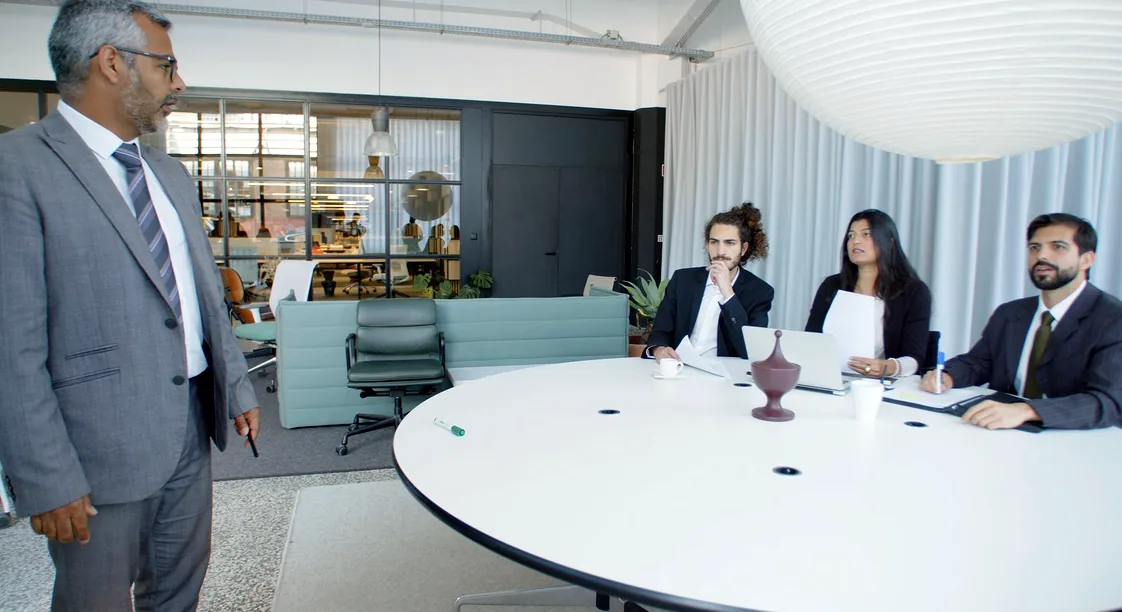
The promise of a hybrid meeting is that being in the room and joining remotely feel roughly equal. It usually breaks on small things: a remote colleague who cannot hear the far end of the table, a camera that shows a distant cluster of faces, five minutes lost to getting anything on screen. Rooms that just work are not lucky; they are the result of matching the platform, the devices and the acoustics to the actual space. The goal is simple to state and hard to earn: a room where the first tap starts the meeting and nobody thinks about the equipment again.
Start with the platform and the room size
Decide first whether rooms run a native platform such as Microsoft Teams or Zoom on dedicated room hardware, support staff bringing their own laptops, or both. Then size everything to the room. A huddle space for four needs a single intelligent camera and a compact bar; a boardroom for sixteen needs wider or multiple cameras and distributed microphones. Using certified devices for the chosen platform avoids the compatibility surprises that undermine trust in a room.
Cameras, microphones and speakers
Remote participants judge a room on being able to see and hear clearly. Auto-framing cameras keep whoever is talking in shot and speaker tracking follows the discussion. Microphone coverage matters most: ceiling arrays or well-placed table microphones must pick up every seat evenly, with echo cancellation so the far end never hears itself. Loudspeakers should spread even, intelligible sound across the room without forcing people to lean in. A second wide camera, or a content camera aimed at a whiteboard, can give the far end context that an auto-framing shot alone would miss.
BYOD, wireless presentation and one-touch control
Content sharing should be effortless for staff and guests alike. Wireless presentation removes the scramble for adapters and lets a visitor share without joining the network. A single console that starts the meeting with one touch, and a scheduling panel at the door, turn the technology into something people use without thinking. When joining is genuinely one action, rooms get used and meetings start on time.
Do not forget acoustics
The best devices cannot rescue a poor room. Hard glass walls cause reflections, noisy air-conditioning raises the noise floor, and long reverberation smears speech. Modest acoustic treatment and attention to background noise often improve a call more than any upgrade of cameras or microphones, because they fix the sound at its source. It is the least visible part of a room and the first thing remote participants notice when it is wrong.
Datacore designs and commissions hybrid rooms as complete, tested spaces rather than boxes of equipment; ask our AV team for a room-by-room plan across your offices.
Frequently asked
Should rooms be built for Teams or Zoom?
Use whichever platform your organisation runs, on certified room hardware for it. Where both are needed, rooms can be set up to run one natively and still accept guest laptops for the other.
What size camera and microphone setup do I need?
It depends on the room. Small rooms suit an all-in-one bar with one camera; larger rooms need wider or multiple cameras and distributed microphones so every seat is seen and heard.
Why do our calls sound echoey?
Usually the room, not the kit. Hard surfaces, glass and air-conditioning noise degrade audio. Acoustic treatment and echo cancellation tuned to the room fix most complaints.