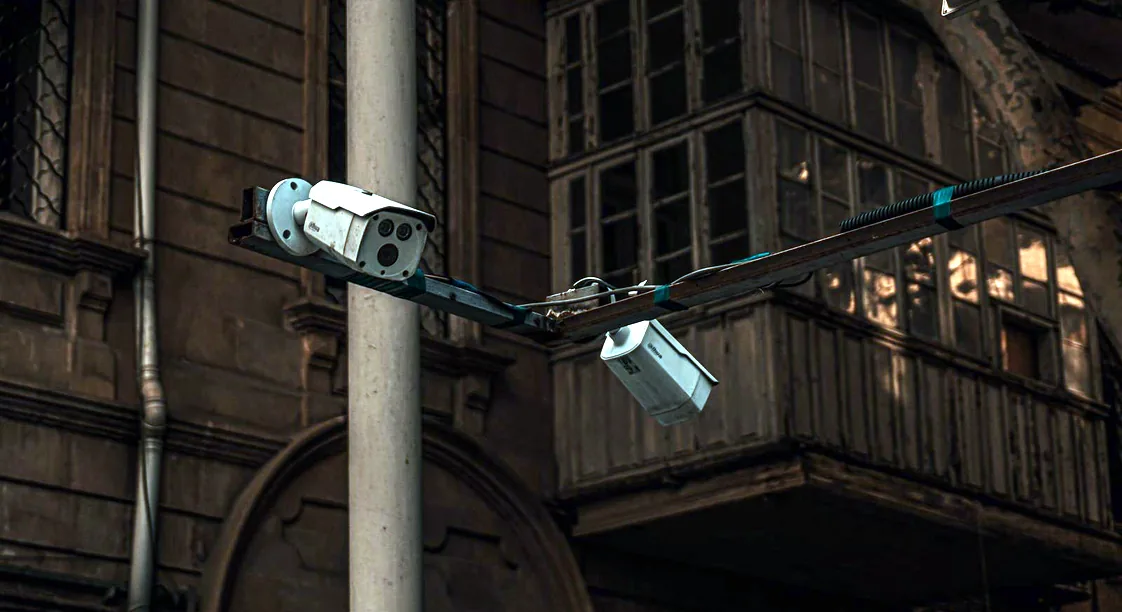
It is tempting to judge a surveillance system by how many cameras it has. Yet a building can be full of cameras and still miss the one image an investigation needs. Coverage is not a headcount; it is the ability to see a defined scene, in the light it actually has, and to recover that footage later. Good design begins with a question for every zone: what must this camera prove, that something happened, who was there, or exactly what they did?
Match the camera to the task
Resolution and field of view work together, and neither alone guarantees a usable image. A wide lens spreading four megapixels across an entire lobby gives useful situational awareness but will not identify a face at the far door. The practical measure is pixel density on target, and the DORI concept of detect, observe, recognise and identify sets very different requirements. Fixed cameras suit defined scenes; PTZ units cover large open areas but only look one way at a time; multisensor and panoramic cameras replace several fixed units at a corner. Choose the type per scene, not per catalogue.
Light, lenses and the real environment
Cameras see light, not scenes, so the environment decides image quality as much as the sensor. Entrances with bright backlight need wide dynamic range or faces become silhouettes. Car parks and perimeters after dark depend on infrared or white light, and a published IR range is a best case that shortens with distance and weather. Reflections, glare and moving foliage generate false events for analytics. Selecting the right lens, mounting angle and lighting for each location is unglamorous work, but it is where coverage is won or lost.
Storage, retention and the VMS
Retention requirements drive storage more than any other factor, and they are often set by regulation or incident-review needs rather than preference. The maths is simple but unforgiving: resolution, frame rate and scene activity set the bitrate, modern H.265 compression reduces it, and multiplying by the days retained gives the capacity. A video management system, the VMS, ties it together with live monitoring, fast forensic search, health alerts and controlled access, while redundancy protects the recording that matters most.
Positioning to remove blind spots
Blind spots hide in the gaps between well-aimed cameras: the base of a mounting pole, the area directly beneath a dome, the reverse of an entry lane. Overlapping fields of view, sensible mounting heights and cameras that watch other cameras against tampering close those gaps. A brief walk of the site with the design overlaid on reality catches more problems than any desk study.
As a single integrator working to standards since 2007, Datacore designs CCTV around coverage objectives and documents the testing that proves them; talk to our security team about a coverage review of your site.
Frequently asked
How many cameras do I need for a site?
There is no fixed ratio. Start from the scenes each area must capture and the detail required, then position cameras to cover those scenes with overlap. The count follows the coverage plan, not the other way round.
What resolution should I choose?
Enough pixels on the target for the task. A situational overview tolerates lower density, while identifying a face or a plate needs a tighter field of view or a higher-resolution sensor at that spot.
How long should footage be retained?
Retention is usually set by regulation or investigation needs. Once you fix the number of days, resolution, frame rate and compression determine the storage required.