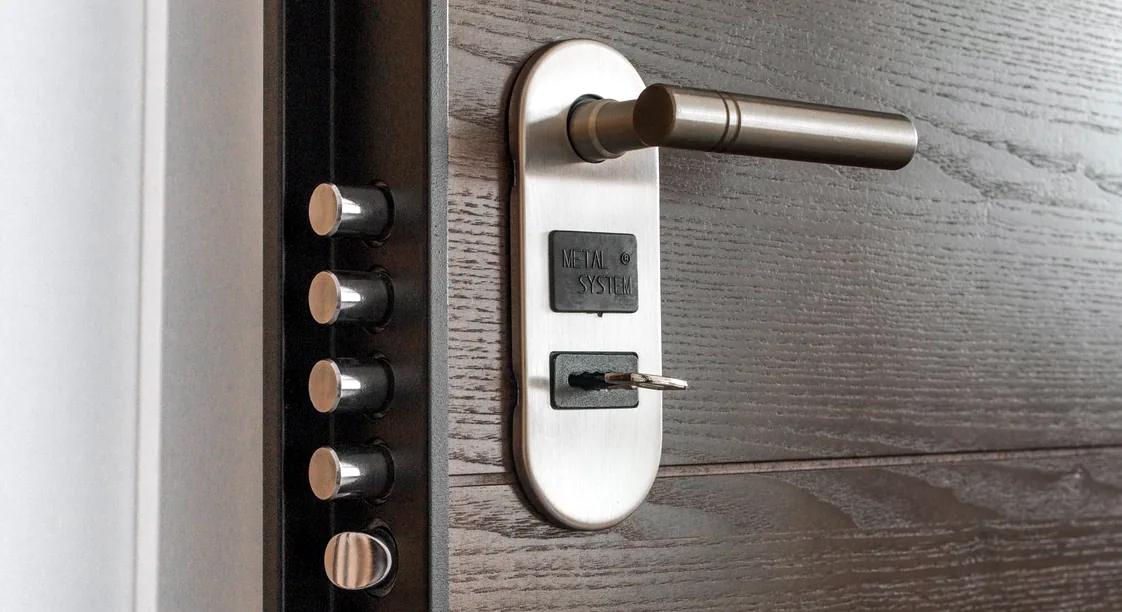
Choosing an access credential looks like a product decision but is really a risk decision. Every option sits somewhere on a line between security and convenience, and the honest answer for most buildings is a mix, a quick tap at the main lobby and something stronger on a server room or cash office. The classic framing still helps: authenticate by something you have, something you know, or something you are.
The credential options
Cards and fobs are familiar and cheap to issue, but older proximity formats are easily cloned, while modern encrypted smart cards close that gap. A PIN adds nothing to carry yet is shared, shoulder-surfed and forgotten. Biometrics, whether fingerprint, face or iris, cannot be lent or left at home and tie an event to a person, at the cost of enrolment, throughput and privacy care. Mobile credentials on a phone, over Bluetooth or NFC, remove physical issuance entirely and are simple to grant or revoke remotely.
Security versus convenience
No single credential is right everywhere. A busy entrance rewards speed, so a smart card or phone keeps queues moving. A high-security door justifies two factors, a card plus a PIN or a card plus a fingerprint, so that a lost credential alone opens nothing. The trap is applying maximum security to every door, which frustrates users until they prop doors open and defeat the system. Match the factor count to the risk behind each door. In practice the best schemes are quiet about security, protecting the doors that matter without slowing the ones that do not.
Beyond the door: anti-passback and audit trails
A credential is only the front end. Anti-passback stops one card being passed back for a second entry and underpins accurate occupancy for mustering. Time schedules limit who enters when, and a complete audit trail records every grant and denial by person, door and time. These features turn a set of locks into a system you can question after an event and report on with confidence.
Talking to CCTV and fire alarm
Access control earns its place when it integrates. Linking each access event to camera footage lets an operator see, not just read, who used a credential and settles tailgating disputes quickly. Integration with the fire alarm is not optional but life safety: on alarm, doors on escape routes must fail safe and release so that egress is never blocked, whatever the credential policy says.
Datacore integrates access control with CCTV and fire systems as one designed, documented whole rather than three products bolted together; ask our security team to map the right credential mix for each door in your building.
Frequently asked
Are biometrics more secure than cards?
They bind an event to a person and cannot be lent, which helps. But throughput, enrolment and privacy handling matter, and the strongest doors often pair a biometric or card with a second factor rather than relying on one.
Can staff use their phones instead of cards?
Yes. Mobile credentials over Bluetooth or NFC avoid printing and posting cards and can be issued or revoked remotely, which suits contractors and rotating staff.
What happens to the doors in a fire?
Doors on escape routes are configured to fail safe and unlock on a fire alarm so people can always get out. This life-safety behaviour overrides normal access rules.